Here's the media presentation to re-submit to Kiho since the last one was not up to snuff. Let me know what you think. I can always tinker with it some more if you don't love it.
Sunday, March 28, 2010

Monday, March 15, 2010


Sunday, March 14, 2010


Article Summary
I just wrote this summary as I read the article. Beware of grammatical errors. We can take screen captures of most of the pictures (graphs) in the article for the powerpoint next week. I have also included a couple videos of marine iguanas swimming around and eating if we wanted to include it.
Severe Effects of Low-Level Oil Contamination on Wildlife Predicted by the Corticosterone-Stress Response: Preliminary Data and a Research Agenda
Scientists measured corticosterone as a way of quantifying stress levels in marine iguanas after the tanker “Jessica grounded”. Low amounts of oil in their main food source of marine algae killed off algae in the intestines of the marine iguanas leading to starvation, and ultimately death.
Corticosterone-Stress Response
Glucocorticoid is a steroid hormone released by all types of vertebrates when exposed to harmful or stressful stimuli. Corticosterone is the primary glucocorticoid in reptiles. In the short-term, glucocorticoids provide benefits allowing the animals to cope with various stressors. While these hormones are essential for survival, exposure to the glucocorticoid for an extended period of time can shut down the reproductive and immune systems.
Galapagos Marine Iguanas: A Case Study
Marine iguanas were chosen in this study to serve as a model species because so many of the island populations react differently to stressors but the iguanas see very sensitive. A single El Niño season can destroy 90% of their population from loss of algae due to warmer water temperatures for extended periods of time. Scientists measured levels of corticosterone immediately after capture and then again 15-30 minutes later. It takes a few minutes for corticosterone to be released so the first samples taken are assumed to be without the stress of capture.
The study did show increased corticosterone levels during El Niño seasons. Those with high levels were in poor body condition. The levels were different at each island because of how differently each island is affected by El Niño but the overall stress-induced corticosterone levels correlated with the predicted overall population health.
A Low-Level Oil Spill: High Wildlife Mortality Confirming the Stress Predictions
By coincidence, blood samples were taken 3 days before the oil tanker “Jessica” ran ashore. Samples were taken again 7 days after the spill to measure changes in corticosterone levels. Both baseline and post-capture levels of corticosterone were much higher than they were prior to “Jessica”. External oil patches on animals did not appear to correlate significantly in any way with corticosterone levels.
By using the mortality rates determined by corticosterone levels from the El Niño study, scientists predicted the mortality rates of iguanas after the oil spill. 40% mortality rate was expected but a year later, 62% had died. Due to the lack of immediate deaths, media reported that the spill was not that damaging, when in fact the damages were just taking longer to arise.
Further Research Needs
- “How are wildlife populations in diverse habitats affected by trace oil contaminations?”
- “What is the exact chain of causation that kills animals after low-level oil contamination, and is corticosterone playing a direct role?”
- “How good a predictor is the corticosterone stress response for survival in other animal populations?”
Summary and Conclusions
This study revealed the longer-term effects of oil spills. It also provided a functional corticosterone-to-survival relationship to help predict population health as well as the effects of human interference as a stressor.
Friday, March 12, 2010
Article for Monday's Assignment
Hey guys, the article that Ailey found for us to use can be accessed through Google. If you search:
"Severe Effects of Low-Level Oil Contamination on Wildlife Predicted by the Corticosterone-Stress Response: Preliminary Data and a Research Agenda"
you will be able to download the PDF. It is the 3rd or 4th link down.
"Severe Effects of Low-Level Oil Contamination on Wildlife Predicted by the Corticosterone-Stress Response: Preliminary Data and a Research Agenda"
you will be able to download the PDF. It is the 3rd or 4th link down.
Monday, March 1, 2010

Email from Allan Baer
Katherine,
I am not sure that you will find the 2003 Clean Energy Accord. Regarding
SolarQuest history, I can get to that soon. Please give a a few days - and
do remind me if you do not hear from me by the end of the week.
Allan
I am not sure that you will find the 2003 Clean Energy Accord. Regarding
SolarQuest history, I can get to that soon. Please give a a few days - and
do remind me if you do not hear from me by the end of the week.
Allan
Players Section
Players Section:
There are still questions to be answered, especially about coalitions and such. Maybe some of that will be answered by Irma, or else not until a later date. We may have to just state that we're still working on it. See you all at 11.
The Galapagos Islands are a unique entity, unlike any other in the world. As the islands were not home to any human settlements everyone that now lives on the island is an immigrant. However, there seems to be a clear distinction between Galapagueños who have lived on the islands for many decades and those more recent immigrants. As the Galapagos population exploded in the 1980s, 90s and 2000s, money became the primary motivator for new settlement. Previously, life on the Galapagos had been difficult, as the islands are extremely remote and lacking in many of the luxuries in life. Those who settled there before often enjoyed the ruggedness and wildness that the islands had to offer. This distinction is important to note, as the limited resources of the islands become depleted, there are different ideas about what should be done. In terms of pollution, many of these immigrants have brought with them non-native species, such as dogs, that have had a profound effect on local lizards. Also, with all these people comes trash. There is no place for trash to go on the Galapagos, as is evident by the trash strewn about the island and in the ocean.
There are several important players in the islands. The local government, including the mayors, holds a large amount of sway over the actions taken in their respective towns. The Galapagos governor is the key federal authority on the islands. The President of Ecuador, Rafael Correa, of course has some authority on the islands. In addition, there are local groups that wield power, such as the fisherman, tour boat operators and the Navy. It still needs to be determined exactly where each group falls in terms of their position to a particular issue. President Correa has recently pledged to make the islands Fossil Fuel free by 2015, so we hope that his intentions are true. When it comes down to it, each group will look after their own best interests, thus it is important to frame the conversation in a way in which their interests are addressed in a positive way for them and the environment.
There are still questions to be answered, especially about coalitions and such. Maybe some of that will be answered by Irma, or else not until a later date. We may have to just state that we're still working on it. See you all at 11.
The Galapagos Islands are a unique entity, unlike any other in the world. As the islands were not home to any human settlements everyone that now lives on the island is an immigrant. However, there seems to be a clear distinction between Galapagueños who have lived on the islands for many decades and those more recent immigrants. As the Galapagos population exploded in the 1980s, 90s and 2000s, money became the primary motivator for new settlement. Previously, life on the Galapagos had been difficult, as the islands are extremely remote and lacking in many of the luxuries in life. Those who settled there before often enjoyed the ruggedness and wildness that the islands had to offer. This distinction is important to note, as the limited resources of the islands become depleted, there are different ideas about what should be done. In terms of pollution, many of these immigrants have brought with them non-native species, such as dogs, that have had a profound effect on local lizards. Also, with all these people comes trash. There is no place for trash to go on the Galapagos, as is evident by the trash strewn about the island and in the ocean.
There are several important players in the islands. The local government, including the mayors, holds a large amount of sway over the actions taken in their respective towns. The Galapagos governor is the key federal authority on the islands. The President of Ecuador, Rafael Correa, of course has some authority on the islands. In addition, there are local groups that wield power, such as the fisherman, tour boat operators and the Navy. It still needs to be determined exactly where each group falls in terms of their position to a particular issue. President Correa has recently pledged to make the islands Fossil Fuel free by 2015, so we hope that his intentions are true. When it comes down to it, each group will look after their own best interests, thus it is important to frame the conversation in a way in which their interests are addressed in a positive way for them and the environment.
Problem Statement- Ben
Humans have introduced pollution in various forms to the Galapagos Islands since westerners first came to the island centuries ago. As more non-native species have settled on the island, the amount of pollution has grown immensely, as has their affect on the islands native ecosystem. Our group intends to study the effect that pollution has played on the ecosystem, and what are some solutions to this problem. We will focus on solutions such as renewable energy and recycling, among others.
Sunday, February 28, 2010
Katherine's Section
Problem Statement:
In the Galapagos, problems relative to human presence on the islands are placing the local ecology at risk. Our team hopes to promote awareness, potentially in association with the World Wildlife Fund, regarding the impacts of human activity on the islands. By promoting sustainable energy practices, we hope to educate those who care about the planet in order to encourage Ecuadorian government to support the development of clean energy alternatives in Galapagos.
Action and Strategy:
The intention of this project is to promote awareness of the projects outlined in the Clean Energy Accord of 2003. We would like individuals to become involved and request that the Ecuadorian government continue with its commitment to change the current energy situation on the Galapagos Islands. By switching to green energy sources such as wind and solar power in the Galapagos, we would prevent significant amounts of pollution from being dumped into the air and sea.
We hope to use our time on the islands to accomplish many goals. We want to gain a greater understanding of the local perceptions surrounding the development of clean energy solutions on the islands. We intend to interview locals in order to better comprehend the drawbacks of such an energy transition so that we may address potential solutions. By doing this, we intend to facilitate the progress of projects and organizations in the Galapagos. We also plan to document our activity on the islands by obtaining still images and video clips of the local ecosystem as a means to prove to individuals why such an energy transition is crucial to the health of the islands.
Before going to the Galapagos, we intend to research the progress of the Clean Energy Accord so that we can understand where and why certain programs have not been successful. Once we gain an extensive understanding of the many facets of the accord, we aim to expose the failures and highlight the achievements. By doing this, we hope to inspire those who are interested in the ecology of the islands to support and promote local projects. We also hope that our media project will rouse positive associations with environmental activism on the islands. If we are able to achieve these goals, we may be able to increase the probability that the goals of the accord are demanded by the people and upheld by the government’s funding and support.
Concerns for 'Action and Strategy' section
Hey guys,
I'm working on the Action and Strategy section of the paper and I'm worried that my outline of our goals may not line up with the other sections. I'm going to do my best to crank it out, but obviously it may need to be severely changed during tomorrow's editing session.
I plan to describe our goals as follows: We intend to provide information to interested individuals regarding clean energy solutions on the islands. By doing this, we hope to foster support for sustainable energy projects that could potentially influence future policy-making decisions.
Thoughts?
I'm working on the Action and Strategy section of the paper and I'm worried that my outline of our goals may not line up with the other sections. I'm going to do my best to crank it out, but obviously it may need to be severely changed during tomorrow's editing session.
I plan to describe our goals as follows: We intend to provide information to interested individuals regarding clean energy solutions on the islands. By doing this, we hope to foster support for sustainable energy projects that could potentially influence future policy-making decisions.
Thoughts?
Part 1 of Policy Paper: Summary and Importance
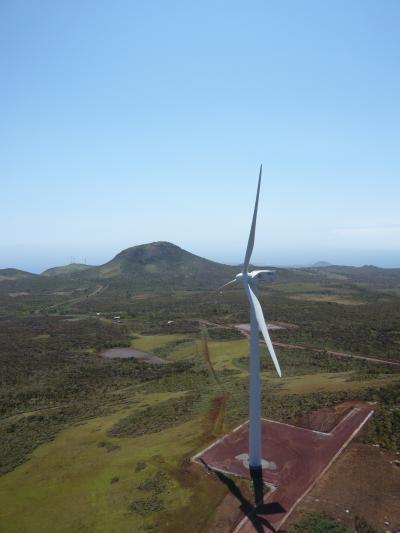
Our goal is to display wind energy as an efficient, practical, and clean energy solution for the Islands of the Galapagos. While this media project will be created with Galapagueno viewers in mind, we hope it could ultimately gain a wider audience of people who can apply these same methods of clean energy to their own environments.
The Galapagos are treasured for being the cradle of evolution and well as the one of most unique ecosystems on our planet. This has lead to increasing population on the islands as well as sky-rocketing tourism. These large amounts of human activity are responsible for devastating effects on the marine and land ecosystems. In order to preserve these unique islands, it is necessary to find ways to promote positive human activity. It is important that the locals understand the importance of being sustainable and protecting the island. Perhaps with the knowledge of wind energy and how it will be beneficial in the long-term, Galapaguenos can be on board with these new solutions. With the people of the Galapagos adopting these new solutions, perhaps the visitors of the islands will be more willing to utilize these methods near their homes.
Thursday, February 25, 2010
Mission Statement
Pollution is one the biggest threats facing the Galapagos today. Pollution is a multi-dimensional, multi-definitional issue which is the unifying thread that ties many interwoven problems. Pollution is everything from air contamination via fossil fuels to physical litter on the island and in the ocean. This not only threatens the endemic species of the islands but also the human populations as well. Many solutions have already been implemented while others have been proposed. These solutions are often just as complex as the problems themselves, if not more.
Some additional references
Iguanas and oil spills
http://www.nature.com/nature/journal/v417/n6889/full/417607a.html
WWF project results
http://www.worldwildlife.org/what/wherewework/galapagos/results.html
Plastic pollution
http://www.inl.co.nz/environment/2008/plasticjunkyard.html
MIT solutions
http://web.mit.edu/12.000/www/m2008/teams/lasiguanas/Transportation.html
Solar
Wind
Past Projects
http://www.santa-cruz-gardens.com/index.cfm/project-construction/
http://www.iadb.org/projects/project.cfm?id=EC0134&lang=en
Volunteer projects
http://www.ecosurfvolunteers.org/
Monday, February 1, 2010
Welcome!!!
Pata Azul Productions is the media portal used by Ailey, Benjamín, Katherine and Phil for the 596 course, Practice of Environmentalism.
Subscribe to:
Posts (Atom)